Skip to Content
Need Help? Call us on 0208 385 3440

What size bike does my child need?
What Size Bike Does My Child Need?
Choosing the right size bike for your child is one of the most important steps in making cycling safe, comfortable, and fun. But with so many options available, how do you know which size to pick?
This guide explains how kids’ bike sizing works and what to look out for. Of course, nothing beats visiting a Ridgeback stockist, where experienced staff can help you find the perfect fit and let your child try before you buy.
How Are Kids’ Bikes Sized?
Unlike adult bikes, which are sized by frame, children’s bikes are sized by wheel diameter.
As bikes increase in size, the wheel size grows to match, ensuring better balance, control, and overall riding experience.
Ridgeback kids’ bikes range from 12-inch wheels for the youngest riders up to 27.5-inch wheels. At this stage, many children are ready to transition to smaller adult bikes.
What Size Bike Should I Choose?
The best bike size depends primarily on your child’s height and confidence level—not just their age.
As a general guide:
- Balance bikes (12") – suitable from around 2 years old
- 14"–16" bikes – ideal for first pedal bikes
- 20"–24" bikes – for developing riders
- 26"–27.5" bikes – for older children and pre-teens
Every child develops differently, so it’s always worth checking the fit in person where possible.
Bike Size Guide
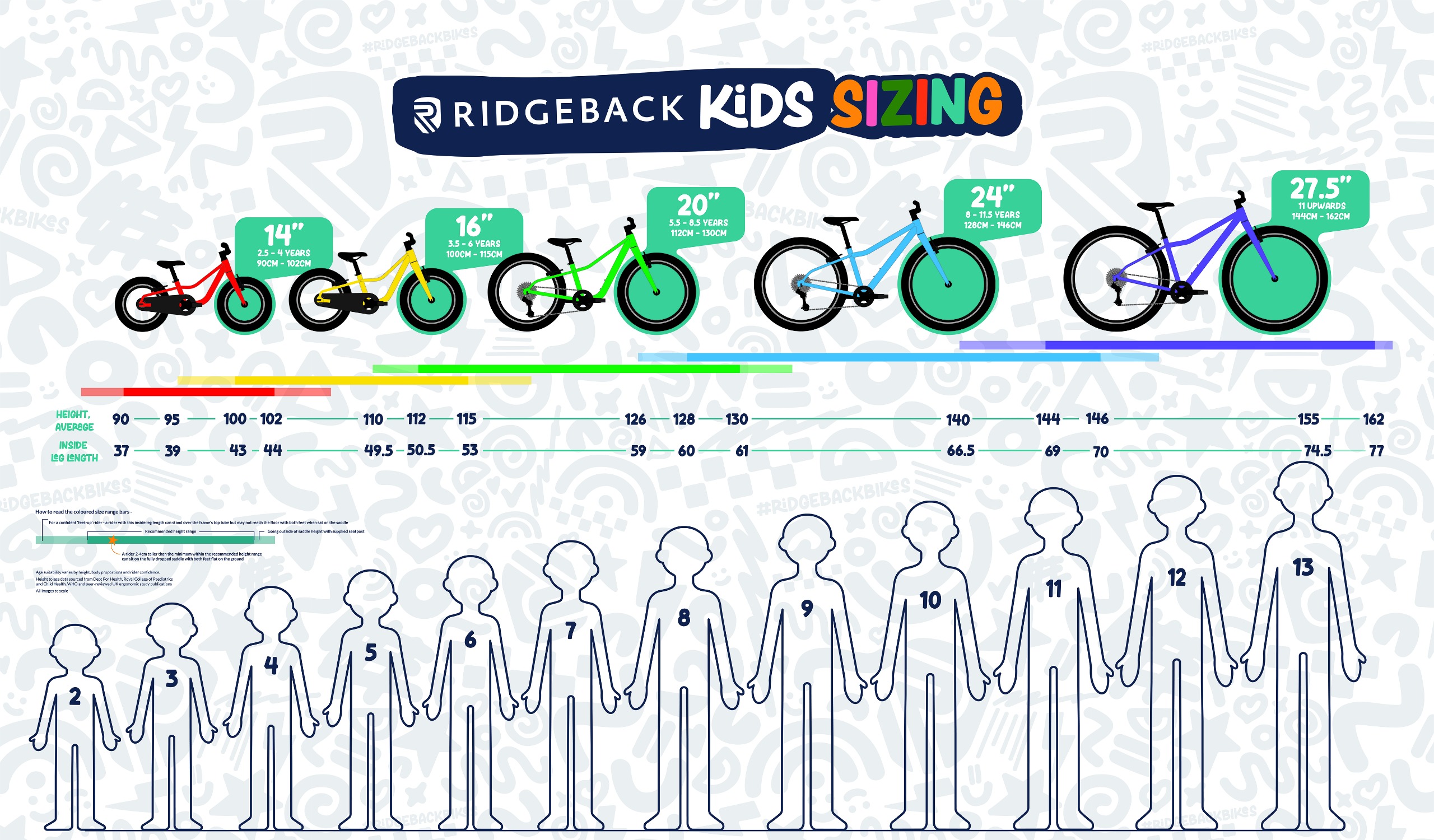
Can My Child Grow Into a Bike?
It might seem sensible to buy a slightly bigger bike so your child can grow into it—but this can backfire.
A bike that’s too large can feel uncomfortable and difficult to control, which may discourage your child from riding altogether. By the time it finally fits, they may have lost interest.
For the best experience, choose a bike that fits now and size up when needed.
How Often Will I Need to Upgrade?
Children typically need a new bike every two to three years, depending on how quickly they grow.
What Happens to Old Bikes?
The good news is you don’t need to hang onto them forever. Ridgeback bikes are built to last, making them ideal for passing down to siblings or selling second-hand.
FAQs
What size bike does my child need?
The right size depends on your child’s height and confidence rather than age alone. Always check the recommended height range and ensure your child can comfortably reach the ground and handlebars.
Is it okay to buy a bike my child can grow into?
It’s not recommended. A bike that’s too big can be hard to control and may put your child off riding. It’s better to choose the correct size now and upgrade later.
How do I know if the bike fits properly?
Your child should be able to:
Stand over the bike with both feet flat on the ground (especially for beginners)
Reach the handlebars comfortably
Sit and pedal without stretching
If they look unstable or struggle to control the bike, it’s likely too big.
Are lightweight bikes really better?
Yes. Lightweight bikes are much easier for children to handle, helping them build confidence, ride longer, and develop skills more quickly.
Should I choose a balance bike or stabilisers?
Balance bikes are generally the better option. They teach balance and coordination first, making the move to pedal bikes quicker and easier than using stabilisers.
How quickly will my child outgrow their bike?
Most children move up a size every 2–3 years, although this can vary depending on growth and confidence.