Skip to Content
Need Help? Call us on 0208 385 3440

Stories | Ridgeback
How to teach your child to ride
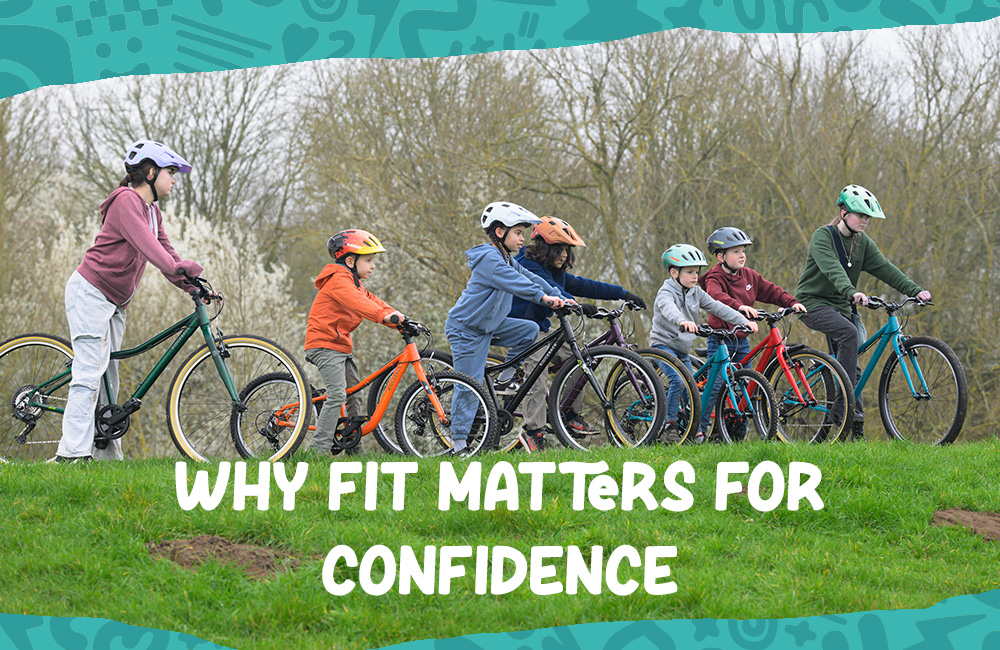
At Ridgeback, we strongly believe that bike fit is the most important aspect of a kids’ bike. This is why we have a large range of bike and wheel sizes and why we always recommend visiting your local bike shop to make sure that you’re getting the best fitting bike for your child as possible.
If you don’t think that bike fit is important, just try this experiment. If you’re reading this on a phone, just hold it at arm’s length and continue reading (or push your laptop to the far side of the dining table). Yes, it’s still possible to read, but it’s not easy, is it? And if your phone is at arm’s length, it gets tiring pretty quick, doesn’t it? Now imagine that you’re a beginner rider and that’s how far away the handlebars are.
What’s the most important thing about learning to ride a bike?
It’s confidence. Your child needs to be comfortable on the bike, with the confidence to set off, needs to know that they can slow down (and stop if they want) and they need the faith that the bike will go where they want it to go. All of the other stuff – like pedaling and gears – can all come later. And you, as a parent, need the confidence that their bike is a good fit for them, that it’s easy enough to steer and slow down and that it’s going to be light and durable enough for the fun (but steep!) learning curve of learning to ride.
Signs your child is ready to learn to ride
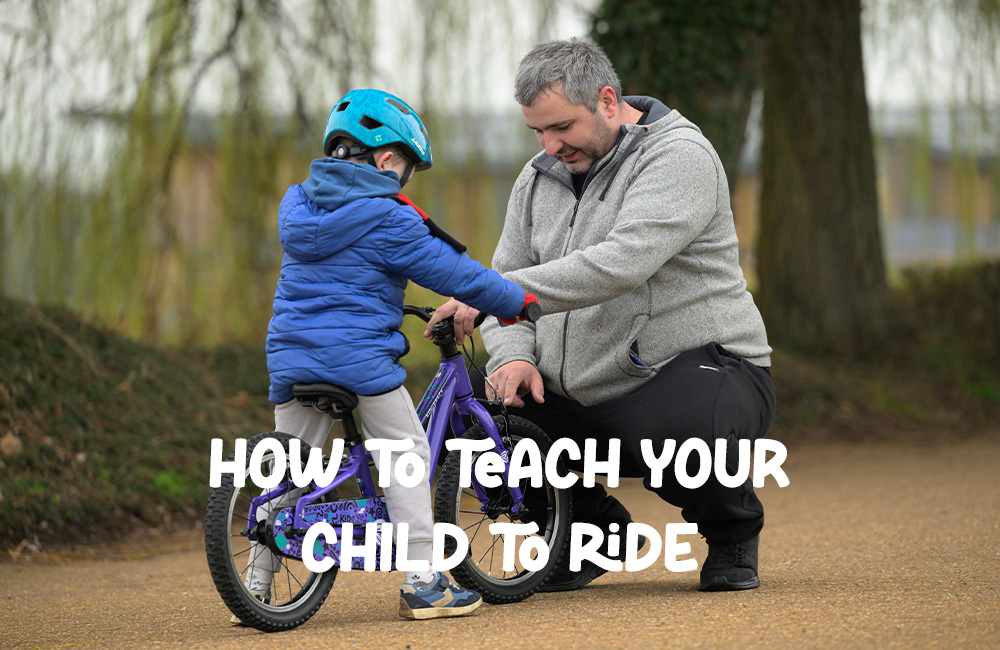
As a parent it can be difficult to know what the perfect time is to start the learning to cycle journey. The truth is, there is no perfect time but children may be ready to start learning to ride when they:
• Can walk and run confidently,
• Show interest in bikes,
• Can balance on a scooter or balance bike,
• Understand simple instructions,
• and feel excited rather than nervous about riding.
Confidence and enjoyment are often more important than age alone.
Why bike fit matters when teaching kids to ride
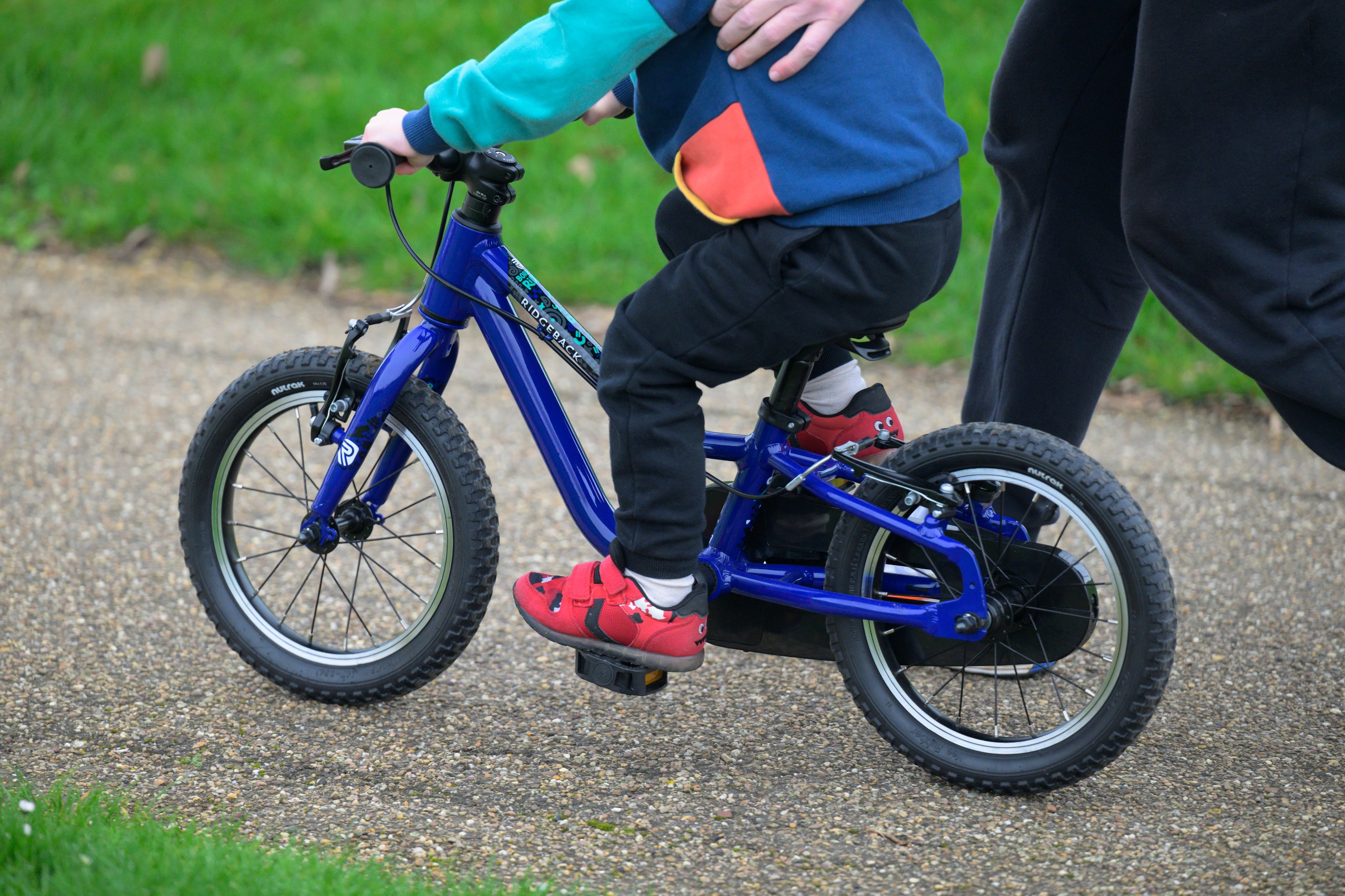
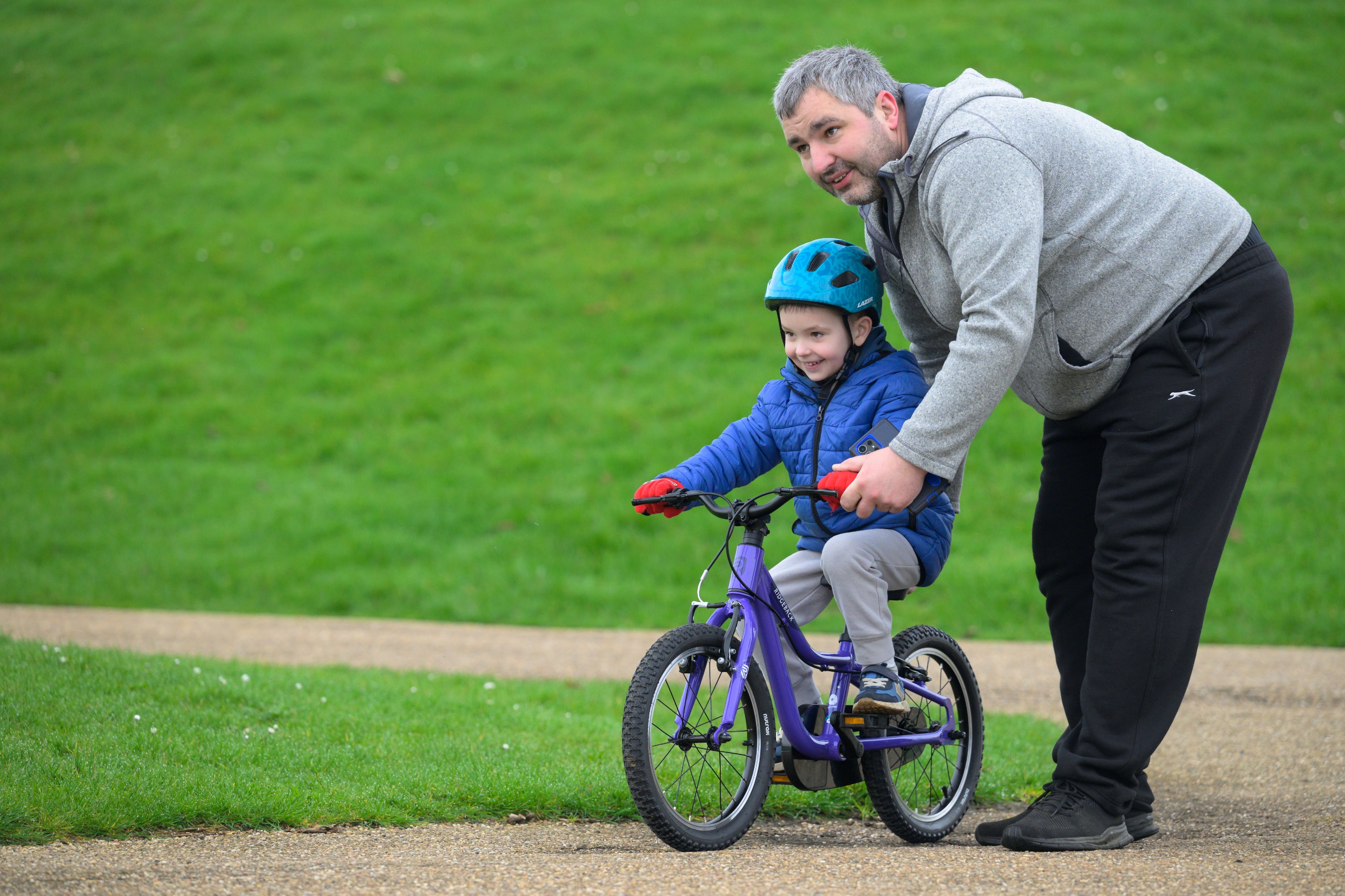
If your child knows that they can easily (and always) put a foot down when things are uncertain, they’ll be way more likely to launch off down the path in the first place. A bike that’s low enough for them to get those feet on the floor – preferably both and preferably flat (at least to start with) will hugely help with that confidence. Equally, the handlebars need to be close enough to them so that it’s not a huge stretch. Just imagine how hard it would be to drive a car if your seat was always as far back as it would go – it’s exactly the same for your child: the handlebars need to be close enough to them when they’re in the saddle that they can steer and brake without having to stretch and strain to get to them. (We cover bike fit in another article HERE!
Are balance bikes better than stabilisers?
The whole ‘balance bikes or stabilisers?’ question is relatively new, as balance bikes, like our Ridgeback Scoot and Scoot XL are a relatively new development. We would always suggest that parents consider starting with a Scoot, simply because they fit smaller riders and your child can start earlier and get used to speeding around, sometimes years before they need to think about pedaling.
What is a balance bike?
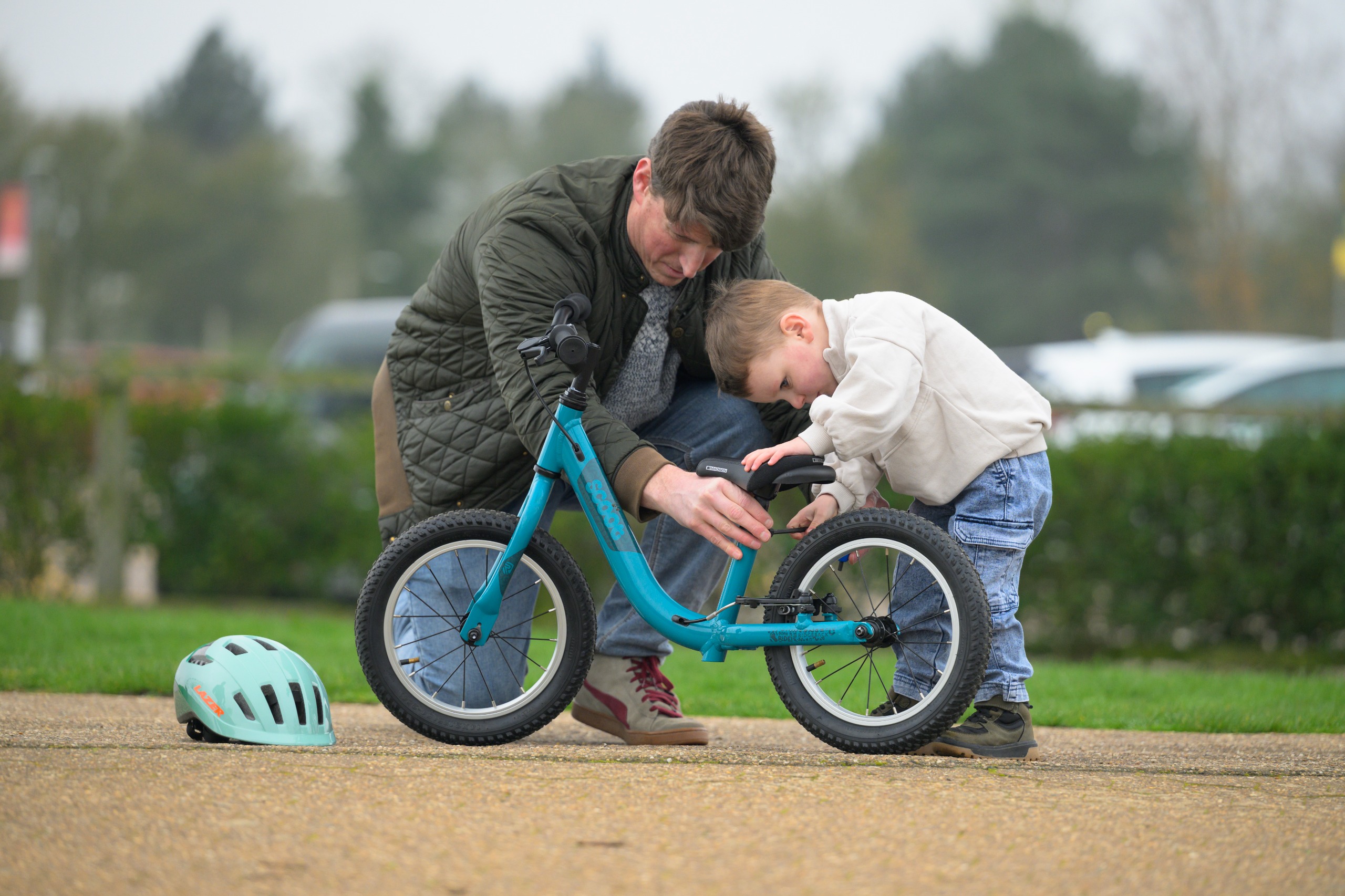
We’re getting ahead of ourselves here. A balance bike, like our Scoot, has small, 12in wheels, a small frame where the saddle can go down very far, handlebars with small grips for small hands, a brake and that’s it. There are no pedals. The little rider simply hops aboard and walks, or runs, while sitting on the saddle. (It’s actually how the very first ‘hobby horse’ bicycles worked, when they were invented in the 1800s.) As your child gains confidence, those first steps become bigger and bigger and they’ll learn that they can ‘coast’ between putting a foot down. They’re already on their way to learning balance and steering, while still feeling very much in control (and the kid-sized brake lever is there to slow them down if it all gets too fast. It’s designed to sit close to the handlebars, so it’s not a big stretch to reach.) And you’ll be pleased to hear that the lightweight aluminium frame makes things easier for your child to scoot, but is also light in weight for when you have to carry it for them on the way home.
Ridgeback balance bikes are designed to help young riders build confidence naturally through lightweight handling and child-specific fit.
When can my child learn to ride? How old should they be?
If they’ll comfortably fit on a balance bike with their feet touching the floor, then whenever they’re ready! We’ve found that children as young as 2 or 3 years old can get on just fine with the Scoot. We also have the Scoot XL, which has all of the same features, the same seven colours and the same price, but is a little taller with 14in wheels, and can be ridden by children between three and six years old. The great thing about a balance bike like the Scoot is that the speed is up to your child. As they grow in confidence, you’ll be able to tell by how much fun they’re having, by how fast you have to run to catch up. And when they’re coasting everywhere and seeking out the fun bits of the park, you’ll know that they’re ready for pedals.
What about pedal bikes?
• Correct bike fit is essential for confidence
• A lightweight bike is easier for children to control
• Children should feel stable and comfortable when stopping
• Oversized bikes can reduce confidence and enjoyment
• Child-specific geometry helps improve handling and safety
When will my child be old enough for a bike with gears?
Regardless of how they get up to speed, your young cyclist is eventually want to get some gears. Bikes like our MX20 or Dimension 20 come with a wide-range of 7-speeds that will give them the freedom to be in the right gear both uphill and downhill. This is the perfect lightweight kids bike for riders aged 5½ and upwards who are making the exciting move to gears and going further than ever before. Gears are a real boost for a young cyclist’s freedom, as they no longer have to find the terrain to suit the gear they have. They now have the gears to get out there and find their own adventures; whether that’s on the cycle trail with you, around the pump track in the park, or even ‘Let’s see what the view is like from up there’ adventures. Once they’ve mastered balance and steering, braking and shifting gears, they can truly consider themselves a young cyclist.
Key takeaways
• Most children learn to ride more confidently when balance comes first
• Lightweight bikes are easier for children to control
• Correct bike fit improves confidence and safety
• Balance bikes like the Ridgeback Scoot can help children progress naturally
• Learning should feel fun, safe and pressure-free
Frequently asked questions about teaching children how to ride bikes
How young can you learn to ride a bicycle?
As long as they can comfortably reach the floor with both feet while sat on the saddle, you can ride a balance bike like the Ridgeback Scoot as young as two years old. Most children begin learning balance and coordination between ages 2 and 5, although every child develops at their own pace.Should my child start on stabilisers or on a balance bike?
We’d always suggest starting on a balance bike if possible, simply because the 12 inch wheeled Scoot is tiny. It’s much smaller than any pedal bike, so they can get the feel of rolling along much younger.How long does it take a child to learn to ride a bike?
Some children learn within a few days, while others may take weeks or months. Confidence and enjoyment are usually more important than speed.When will I know my child is ready for a pedal bike?
Don’t worry, they’ll let you know! But, you’ll know as they’ll be freewheeling on their balance bike way more than they’re scooting. They’ll be finding every slope so that they can roll down them. Once they can roll for ten seconds or more, feet-up, then they’re ready for a pedal bike.What about gears? Do kids’ bikes need gears? How many?
It’s not about how many, it’s about the range of gears. Initially, a single speed is fine, as there’s already enough going on with pedaling, without having to think about gears, but eventually, they’ll want gears so they can keep up with you, and to get up (and down) hills.
Your kid will need big (hard) enough gears to pedal furiously alongside you on the old railway track, but also small enough gears to be able to ride up that ‘massive’ hill in the park, or to pedal home slowly after a hard day of tearing around. Shimano’s wide-range, seven speed gears provide enough spread for all of that.
What is the best first bike for a child?
A lightweight, properly fitting children's bike with child-specific geometry is usually easiest for beginners to control.
We Recommend
-

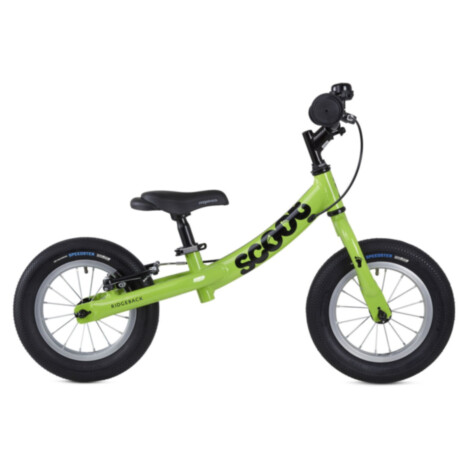 Ridgeback Scoot£149.99
 -
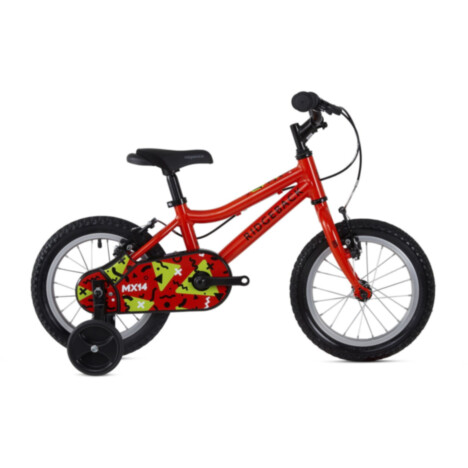 Ridgeback MX14£199.99
 -
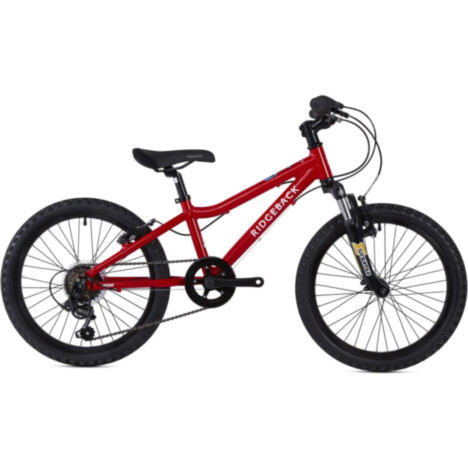 Ridgeback MX20£349.99
 -
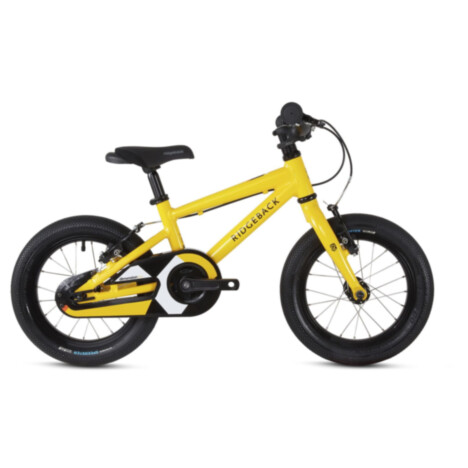 Ridgeback Dimension 14£299.99
 -
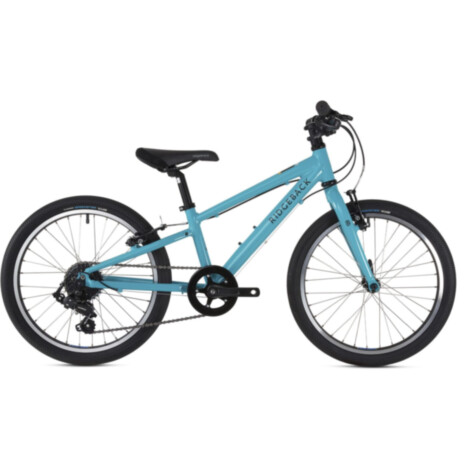 Ridgeback Dimension 20£419.99